
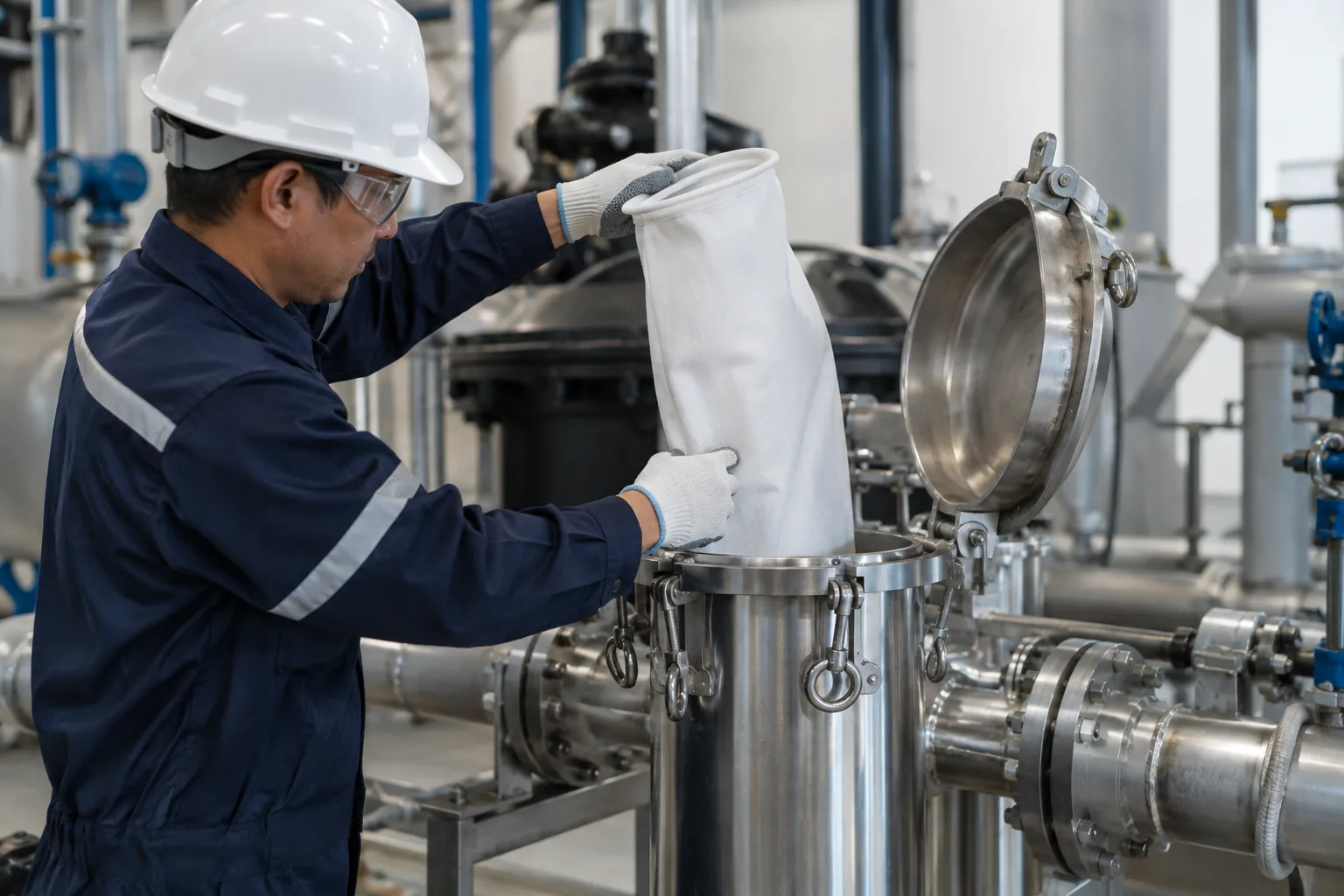
How to Choose a Bag Filter Housing: 7 Factors to Consider Before Selection
Understanding how to choose a bag filter housing starts with your filtration application. Flow rate, liquid characteristics, filtration requirements, housing material and operating conditions can all influence the right configuration. Therefore, industrial buyers should evaluate the complete process rather than selecting a housing based only on price, physical size or material.
Bag filter housings support liquid filtration across industries such as water treatment, chemicals, food and beverage, electronics, petrochemicals and manufacturing. However, different applications place different demands on the filtration system. A housing that works well in one process may not suit another.
So, what should you consider before making a selection?
What Does a Bag Filter Housing Do?
A bag filter housing holds the filter bag securely while process liquid flows through the filtration system. The liquid enters the housing and passes through the filter bag, where the media captures unwanted particles before the filtered liquid leaves the housing.
According to Eaton’s technical guidance on bag filter housings, the filter bag sits inside a restrainer basket that supports it as differential pressure increases. Eaton also notes that housing designs can vary according to operating conditions, construction materials, connection arrangements and other operating parameters.
As a result, choosing a housing requires more than matching it with a filter bag.
1. Start With the Required Flow Rate
First, determine how much liquid must pass through the filtration system within a given period.
Flow rate matters because the housing and filtration media need enough capacity to handle the process without creating unnecessary restriction. Moreover, industrial systems may experience changes or peaks in flow rather than operating at one constant rate.
Technical guidance from Parker on filter housing selection highlights maximum flow rate and fluid viscosity as important considerations when sizing filtration equipment. It also explains that pressure differential depends on factors including housing and element size, media grade, fluid viscosity and flow rate.
Therefore, before selecting a bag filter housing, identify the expected operating flow and discuss any significant flow variations with the filtration supplier.
2. Define Your Filtration Requirements
Next, consider what the filtration system needs to remove.
A process that removes relatively large suspended particles has different requirements from one that needs finer particle control. The required filtration level will influence the filter bag selection and can also affect pressure differential and system performance.
However, avoid choosing a finer filtration rating simply because it sounds better. Instead, match the filtration level to the actual process objective.
For example, ask:
- What contaminants need to be removed?
- What particle size is important to the process?
- What level of product cleanliness does the application require?
- Does the process act as pre-filtration for another treatment stage?
These questions provide a stronger starting point than selecting a filter solely by micron rating.
3. Understand the Liquid Being Filtered
The process liquid also affects housing selection.
Water, oils, solvents, chemicals and food-processing liquids can behave differently inside a filtration system. Therefore, buyers should consider characteristics such as viscosity, chemical composition and operating temperature.
Viscosity deserves particular attention because thicker liquids may behave differently from water under the same flow conditions. Likewise, chemically aggressive liquids require materials that remain compatible with the process fluid.
4. Choose a Suitable Housing Material
Once you understand the process fluid, evaluate the housing material.
Industrial filter housings are available in different materials because operating environments vary. For example, stainless-steel housings are widely used across industrial liquid-filtration applications, while non-metallic options can serve applications where their material properties better match the process.
Material selection should consider factors such as:
- Fluid compatibility
- Corrosion conditions
- Operating temperature
- Operating pressure
- Cleaning requirements
- Process environment
For example, Eaton offers stainless-steel bag housings as well as polypropylene and PVDF configurations for particular applications. Its non-metallic POLYLINE range specifically addresses applications where corrosion resistance is an important consideration.
Ruickly likewise provides both stainless-steel and non-metallic filter housing solutions for different industrial filtration requirements.
Therefore, avoid treating one material as universally superior. The appropriate material depends on what the housing will encounter during operation.
5. Check Operating Pressure and Temperature
Pressure and temperature are not details to consider after choosing the housing. They form part of the selection process itself.
Every housing design has defined operating limits. Consequently, the selected unit must suit the conditions expected in the actual system.
Manufacturer specifications illustrate why this matters. Different bag filter housing models can have different pressure, temperature and flow ratings depending on their construction and configuration. For instance, Eaton publishes these parameters separately across its single- and multi-bag housing ranges.
Before selection, establish the relevant operating conditions and compare them with the manufacturer’s specifications. If the process experiences changing or demanding conditions, discuss those requirements with the supplier rather than relying only on nominal values.
6. Decide Between Single-Bag and Multi-Bag Configurations
Not every application needs the same number of filter bags.
A single-bag housing can suit many industrial filtration duties. However, applications with higher flow requirements or different capacity needs may require a multi-bag configuration.
Multi-bag housings allow several filter bags to operate within the same filtration system. As a result, manufacturers can configure housings for substantially different flow requirements.
For example, Eaton’s multi-bag ranges use different numbers of filter bags across different housing sizes and rated flow capacities. This demonstrates why housing configuration and required flow should be considered together rather than independently.
However, more bags do not automatically mean a better system. The appropriate configuration depends on the application, flow requirements and operating conditions.
7. Consider Installation and Maintenance Before Buying
Finally, think about how the housing will fit into the existing system and how operators will maintain it.
A technically suitable housing can still create practical problems if the installation does not provide enough room for operation, inspection or filter-bag changes.
Before purchasing, consider:
- Inlet and outlet connections
- Piping arrangement
- Available installation space
- Housing orientation
- Access to the closure
- Filter-bag changeout
- Drainage and venting requirements
- Inspection and maintenance access
Connection arrangements can vary between housing models. In addition, some configurations offer different piping layouts to accommodate installation requirements.
Therefore, involve the people who operate or maintain the filtration system when evaluating the installation—not only the purchasing team.
How Do You Select the Right Filter Bag for the Housing?
The housing and filter bag work as one filtration system, so you should evaluate them together.
First, confirm the bag size that the housing accepts. Then, select filtration media and micron rating according to the liquid, contaminants and filtration objective.
The filter bag must also remain compatible with the process conditions. Therefore, consider the liquid chemistry and temperature rather than choosing a bag only because it fits physically inside the housing.
In practice, the selection process should connect four questions:
What are you filtering? → What must you remove? → Under what operating conditions? → Which housing and filter bag combination suits those requirements?
This approach reduces the risk of treating the housing and filter media as unrelated purchases.
How Does Bag Filter Housing Size Affect Filtration?
Housing size relates to the required filtration capacity, but there is no single housing size that suits every application.
Flow rate, fluid viscosity, filtration media and pressure differential can all affect sizing. Therefore, industrial buyers should avoid selecting a housing using physical dimensions alone.
Parker’s filtration guidance, for example, identifies housing and element size, media grade, fluid viscosity and flow rate as factors that influence pressure differential.
For this reason, final sizing should use actual process information and relevant manufacturer data rather than a general rule taken from another application.
When Should a Bag Filter Housing Be Inspected or Replaced?
A filter bag and a filter housing are different components, so they should not follow the same replacement logic.
The filter bag acts as the replaceable filtration element that collects contaminants during operation. The housing, meanwhile, contains and supports the filtration assembly.
Therefore, replacing a filter bag does not mean the housing itself needs replacement.
Operators should inspect the housing and its relevant components as part of the system’s maintenance programme. If an inspection identifies deterioration, damage, sealing problems or another condition that could affect safe or reliable operation, the operator should assess the housing according to the manufacturer’s guidance and site maintenance requirements.
This distinction matters because asking “How often should I replace a bag filter housing?” does not have one universal answer. The condition of the equipment and its operating environment matter.
What Should You Look for in a Bag Filter Housing Manufacturer?
Once you understand the application requirements, you can have a much more productive conversation with a bag filter housing manufacturer.
Instead of asking only for a price, provide information such as the process liquid, required flow rate, filtration requirement, operating pressure, temperature, preferred material and connection requirements.
A filtration manufacturer can then assess whether a standard configuration fits the application or whether the system requires a more specific solution.
Ruickly manufactures industrial filtration equipment that includes bag filter housings, cartridge filter housings, strainer filter housings, stainless-steel and non-metallic filter housings, as well as filter bags and cartridges. The company also states that it supports customised solutions based on requirements such as drawings, flow rates, materials and operating conditions.
You can explore Ruickly’s industrial filter housing range to review the available configurations.
Choosing the Right Bag Filter Housing Starts With the Application
Choosing a bag filter housing becomes easier when you start with the process rather than the product.
First, define the flow rate and filtration objective. Next, understand the liquid and operating conditions. Then, evaluate material, housing configuration, connections and maintenance requirements together.
Most importantly, avoid looking for one “best” bag filter housing for every situation. A suitable housing should match the actual filtration application and operating requirements.
Frequently Asked Questions
1. What is a bag filter housing used for?
A bag filter housing holds a filter bag during liquid filtration. As liquid passes through the system, the filter bag captures unwanted particles while the filtered liquid continues through the process.
2. How do I choose the right bag filter housing?
Start with your application requirements. Consider the required flow rate, filtration level, process liquid, material compatibility, operating pressure, temperature and installation requirements. These factors help determine a suitable housing size and configuration.
3. What is the difference between single-bag and multi-bag filter housings?
A single-bag housing uses one filter bag, while a multi-bag housing holds several bags within the filtration system. Multi-bag configurations can support applications with different or higher flow requirements, but the right choice depends on the actual process conditions.
4. How often should a filter bag be replaced?
There is no universal replacement schedule because filter-bag life depends on factors such as contaminant loading, flow conditions and the filtration process. Operators should monitor system performance and follow the filter manufacturer’s maintenance recommendations.
5. What information should I provide to a bag filter housing manufacturer?
Provide details such as the process liquid, required flow rate, filtration requirement, operating pressure and temperature, preferred material, connection size and installation conditions. With this information, the manufacturer can assess which housing configuration suits the application.
Need Help Selecting a Bag Filter Housing?
If you are unsure which filter housing configuration suits your industrial filtration process, Ruickly can help assess your application requirements and recommend a suitable solution.
Share your flow rate, process liquid, filtration requirement, operating conditions and material requirements with the Ruickly team to start the selection process.