
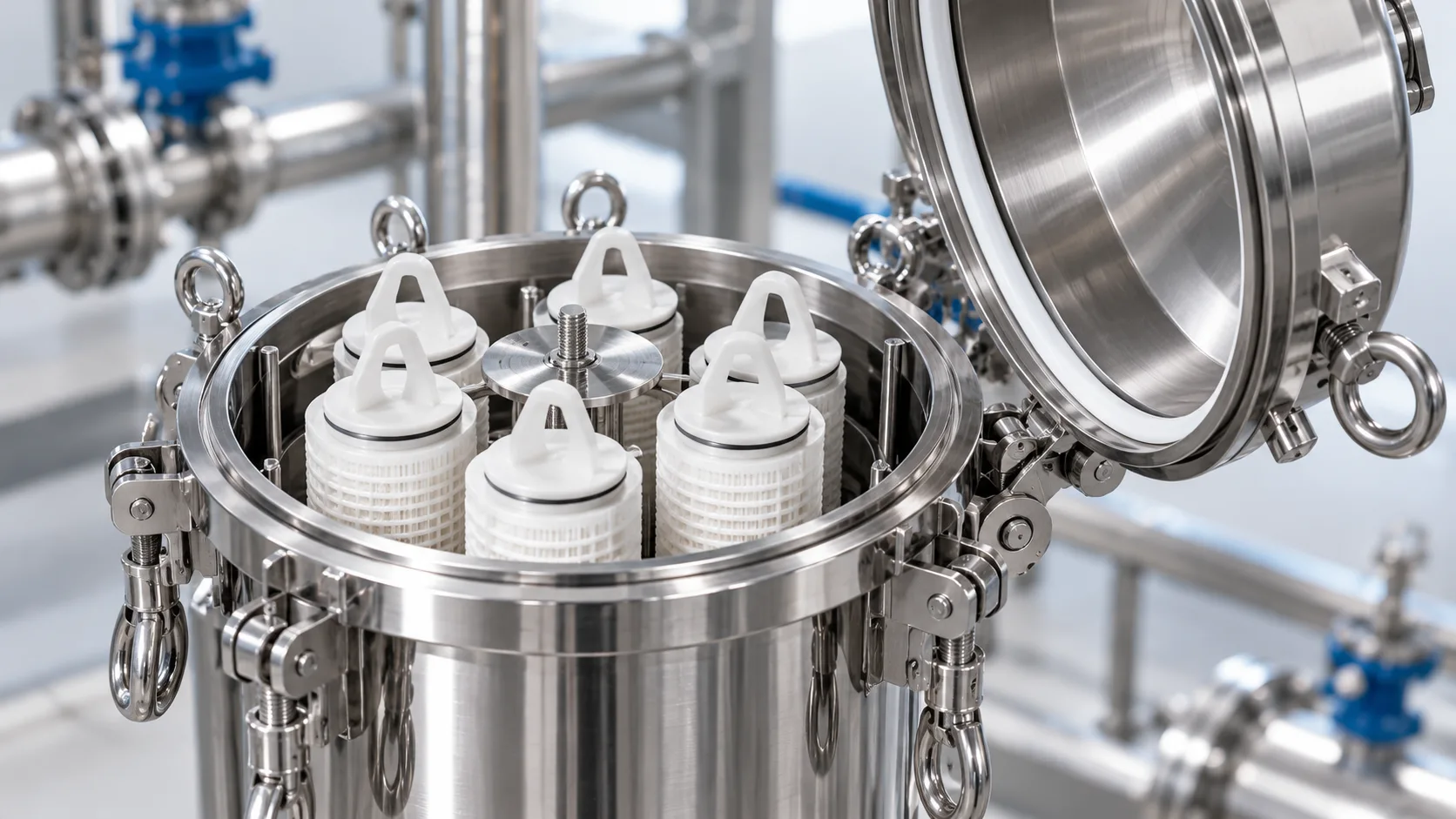
How to Choose a Cartridge Filter Housing: Sizing, Compatibility & Key Considerations
A cartridge filter housing may have the correct connection size, accommodate the required number of filter elements, and fit within the available installation space. Yet those details alone do not guarantee that it will work with your filtration system.
Consider a replacement project in which a plant wants to retain its existing cartridges. The proposed housing matches the nominal cartridge length, but its internal adapters use a different sealing arrangement. Although the vessel appears suitable on paper, the cartridges cannot seat correctly.
This illustrative situation highlights a common purchasing risk: the housing, cartridges, and process conditions must work together as a complete filtration assembly.
For industrial buyers, choosing a cartridge filter housing involves more than comparing stainless steel grades or maximum flow ratings. You need to understand how the equipment will perform, whether it can accommodate the selected cartridges, and how it will integrate into the process.
Start With the Filtration Duty, Not the Housing Dimensions
Before comparing housing models, establish what the filtration system needs to achieve.
A replacement project often has different priorities from a new installation. If the plant already uses an approved cartridge model, the replacement housing must accommodate that element’s dimensions, sealing interface, and operating requirements. Changing the cartridge may require additional technical evaluation or process approval.
A new installation offers more flexibility. Engineers can evaluate the cartridge and housing together, balancing filtration performance, pressure losses, equipment dimensions, and maintenance requirements.
In either case, the process liquid influences the selection. Water, lubricating oils, and chemical solutions can behave differently under similar flow conditions. Viscosity affects hydraulic resistance, while chemical composition and temperature influence material compatibility.
The filtration objective matters just as much. A system intended to remove relatively coarse suspended particles may require a different cartridge configuration from one designed for finer particle retention.
Consequently, buyers should establish the required filtration performance, normal and peak flow rates, fluid properties, operating temperature, and pressure conditions before selecting a housing.
This information allows the manufacturer to evaluate the complete duty rather than recommend equipment based on nominal dimensions alone.
Single-Cartridge, Multi-Cartridge or High-Flow Housing?
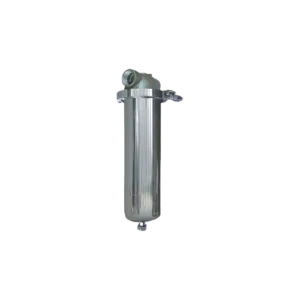
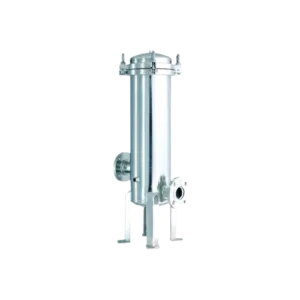
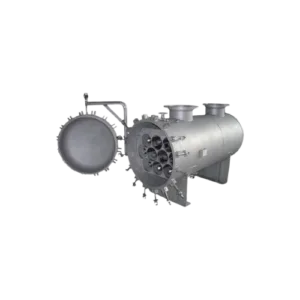
Cartridge filter housings come in different configurations because industrial applications have different capacity, installation, and maintenance requirements.
| Configuration | When It May Be Suitable | Main Consideration |
|---|---|---|
| Single-cartridge housing | One selected element can meet the required filtration duty. | Element capacity, pressure drop, and service clearance. |
| Multi-cartridge housing | The application requires more filtration area than one conventional element can provide. | Element quantity, flow distribution, internal sealing, and maintenance access. |
| Dedicated high-flow housing | A compatible high-flow element system offers a suitable capacity and equipment arrangement. | Element format, hydraulic performance, flow direction, and replacement compatibility. |
When a Single-Cartridge Housing Makes Sense
A single-cartridge housing can provide a practical solution for smaller process streams, equipment protection, or point-of-use filtration.
However, the selected cartridge must handle the required flow without exceeding the applicable operating limits.
A cartridge may provide the required filtration efficiency but create excessive pressure drop at the design flow. Therefore, buyers should assess its hydraulic performance rather than assume that a suitable micron rating guarantees sufficient capacity.
Installation space matters as well. Even a compact vessel needs enough clearance for opening the housing and removing the cartridge.
For applications where one element can meet the duty, Ruickly’s single-cartridge filter housing range includes models identified for DOE and SOE 222 cartridge arrangements. Buyers should still verify the exact cartridge interface against the selected model.
When Multiple Cartridges Become Necessary
Multi-cartridge housings allow several filter elements to operate within one vessel. This arrangement can provide additional filtration area when a single cartridge cannot meet the required flow under acceptable hydraulic conditions.
Nevertheless, cartridge count alone does not determine system capacity.
The housing must distribute the liquid appropriately, maintain effective sealing, and support the elements throughout operation. Its internal passages and connections also contribute to the overall pressure loss.
Maintenance introduces another consideration. A multi-cartridge vessel may reduce the number of separate housings, but technicians still need adequate space and time to replace each element.
Therefore, the best configuration balances filtration performance with installation and maintenance requirements. Ruickly’s cartridge filter housing range includes multiple cartridge arrangements that buyers can review against their process requirements.
Where High-Flow Cartridge Housings Fit
Dedicated high-flow systems may offer an alternative when an application requires substantial filtration capacity.
However, a high-flow cartridge housing is not simply a conventional housing with larger connections.
High-flow elements can use different diameters, end connections, support arrangements, and flow directions. Consequently, a high-flow cartridge may not fit a conventional housing even when both use similar nominal lengths.
Buyers should evaluate the complete element and vessel arrangement, including hydraulic performance and replacement cartridge availability.
Ruickly’s high-flow cartridge filter housing range includes horizontal and vertical configurations. The appropriate orientation depends on the process layout, maintenance access, and selected cartridge system.
How to Size a Cartridge Filter Housing
Housing sizing begins with the required filtration duty and the performance of the selected filter elements.
The objective is to establish a configuration that can handle the operating flow while maintaining acceptable hydraulic conditions throughout the intended service cycle.
Understand the Relationship Between Flow and Pressure Drop
Every filter cartridge creates resistance as liquid passes through its media.
This resistance produces a pressure difference across the element. Its magnitude depends on the cartridge design, filtration media, flow rate, fluid viscosity, and temperature.
Two cartridges with the same micron rating may therefore have different pressure-drop characteristics.
For example, a cartridge that performs satisfactorily with water may produce a higher pressure drop when filtering a more viscous liquid at the same flow rate.
This is why buyers should request flow-versus-pressure-drop data for the selected cartridge and evaluate whether the published conditions resemble their application.
A maximum flow figure, taken without its operating assumptions, does not provide a reliable basis for sizing.
Determine the Required Cartridge Quantity
Once the engineer establishes an acceptable operating flow per cartridge, the total design flow can provide an initial estimate of the required element quantity.
In a conventional parallel multi-cartridge arrangement, dividing the required total flow by the allowable flow per element may offer a preliminary starting point.
However, this calculation does not complete the design.
The engineer must still consider the housing’s internal geometry, flow distribution, pressure losses, expected contaminant loading, and operating margin.
Adding more cartridges can increase the available filtration area, but it does not guarantee a proportional increase in usable system capacity.
Final sizing should therefore use the relevant cartridge performance data together with the proposed housing configuration.
Distinguish Cartridge Differential Pressure From Housing Pressure Drop
This distinction becomes especially important when comparing technical quotations.
Cartridge differential pressure describes the pressure difference across the filter element itself.
Assembly pressure drop describes the pressure difference between defined measurement points upstream and downstream of the installed filtration assembly. Depending on the instrument locations, this measurement may include losses through the housing connections, internal passages, and filter elements.
Housing pressure rating, meanwhile, concerns the pressure-containing vessel under specified conditions.
These values describe different aspects of the filtration system and cannot be used interchangeably.
For example, a housing may remain within its allowable operating pressure while an installed cartridge approaches its maximum permitted differential pressure. The housing’s pressure rating does not establish the cartridge’s mechanical differential-pressure capacity.
Similarly, pressure instruments installed across the complete assembly do not necessarily measure the isolated differential pressure of the filter element.
When reviewing performance data, buyers should confirm the measurement locations, flow rate, fluid properties, and whether the stated pressure drop applies to the element or the complete assembly.
Account for Cartridge Loading During Operation
Pressure drop also changes as the cartridge captures contaminants.
A clean element generally has lower resistance than the same element after significant particle accumulation. As loading increases, the filtration system may approach its defined changeout condition.
Therefore, sizing should not focus only on initial startup performance.
The engineer should consider the expected operating range and establish how the system will determine when cartridge replacement becomes necessary.
Depending on the process, the changeout decision may involve differential pressure, assembly pressure drop, filtration performance, or other operating constraints.
Where contaminant loading is uncertain, suppliers should avoid presenting an unsupported service-life estimate as a guaranteed replacement interval.
Cartridge Compatibility: Why Nominal Length Is Not Enough
Cartridge compatibility deserves particular attention when replacing an existing housing or sourcing filter elements from another manufacturer.
A buyer may request a vessel for a nominal 20-inch or 30-inch cartridge and assume that the stated length provides enough information.
However, cartridges with similar nominal descriptions can differ in actual length, outside diameter, sealing geometry, and retention requirements.
These differences matter because the element must seat correctly inside the housing and maintain the intended seal.
A cartridge that does not engage the correct adapter or lacks proper support may create bypass or mechanical problems.
DOE and SOE Cartridge Designs
Double-open-end (DOE) cartridges have openings at both ends. Depending on the housing design, they may rely on sealing surfaces, gaskets, retainers, or compression components.
Single-open-end (SOE) cartridges typically use a designated sealing interface at one end, while the opposite end follows a particular closed-end or retention configuration.
The descriptions DOE and SOE identify broad cartridge arrangements. They do not guarantee interchangeability between different manufacturers or housing models.
For instance, two DOE cartridges may have different gasket or compression requirements. Likewise, two SOE cartridges may use different adapter arrangements.
For this reason, buyers should compare the approved cartridge drawing with the proposed housing’s internal design rather than relying solely on the cartridge’s nominal description.
What Is the Difference Between 222 and 226 Cartridge Connections?
The terms 222 and 226 refer to different cartridge sealing-interface families. They are not interchangeable descriptions.
A housing designed for a 222 interface should not automatically be assumed to accept a 226 cartridge. Even within the same interface family, the complete end-cap arrangement may differ.
The closed-end design, retention features, adapter geometry, and O-ring arrangement all influence compatibility.
For replacement projects, buyers should confirm the actual cartridge model and compare its dimensions against the housing manufacturer’s drawings.
A matching end-cap label is useful information, but it is not a substitute for dimensional verification.
DOE, SOE, 222, and 226 terminology should not be treated as proof of universal interchangeability under a single recognized standard. The approved component drawings and manufacturer-specific compatibility requirements remain essential.
Mechanical Fit Is Only Part of Compatibility
Even when a cartridge fits the housing correctly, it must also meet the process requirements.
The filter media must provide suitable filtration performance and remain compatible with the process liquid. The seals must withstand the operating and cleaning conditions.
In addition, the cartridge’s allowable differential pressure must suit the intended operating conditions.
Therefore, buyers considering alternative replacement cartridges should evaluate both mechanical fit and filtration performance. A matching micron rating alone does not establish equivalence.
Choosing the Right Housing Material
Material selection depends on the liquid chemistry, operating temperature, cleaning conditions, and required equipment performance.
Stainless steel housings are common in industrial liquid filtration, but different stainless steel grades do not offer identical corrosion resistance.
Stainless Steel 304 vs 316
Stainless steel 304 and 316 can both serve in industrial equipment, depending on the application.
Grade 316 contains molybdenum, which generally improves resistance to certain forms of localized corrosion compared with 304.
The British Stainless Steel Association’s technical explanation of stainless steel corrosion resistance describes how alloy composition affects resistance to localized attack, including chloride-related corrosion.
However, 316 should not be treated as universally corrosion-resistant.
Chloride concentration, temperature, surface condition, and crevice geometry can influence corrosion behavior. The BSSA’s overview of corrosion mechanisms explains why pitting, crevice corrosion, and stress corrosion cracking require attention when evaluating stainless steel for a particular environment.
Consider two applications. One handles a relatively mild aqueous liquid under controlled conditions. Another handles a chloride-containing solution at an elevated temperature.
Although both applications involve liquid filtration, they may require different material evaluations.
In the second case, chloride concentration, temperature, pH, and other chemical conditions can significantly influence corrosion risk.
Consequently, choosing 316 simply because it is often described as more corrosion-resistant does not eliminate the need for a proper compatibility review.
Consider the Complete Wetted Assembly
The vessel shell is only one part of the filtration system.
O-rings, gaskets, adapters, internal supports, and other wetted components may encounter the same process liquid.
An incompatible seal can compromise the filtration assembly even when the housing material itself is suitable.
Cleaning conditions can also introduce additional chemical or temperature exposure.
Therefore, the material review should cover the complete wetted assembly rather than focus exclusively on the housing alloy.
If the process chemistry creates significant uncertainty, the buyer should obtain a qualified materials review before final approval.
When Another Housing Construction May Be Appropriate
Not every industrial filtration application requires the same vessel material.
Depending on the process, other metallic or non-metallic housing constructions may be worth evaluating. However, suitability depends on the actual construction, chemical environment, and pressure-temperature requirements.
For example, an FRP housing’s chemical resistance depends on its resin system, liner, reinforcement, and operating conditions. It should not be assumed that every FRP construction can withstand every aggressive process liquid.
Buyers evaluating non-metallic options can explore Ruickly’s FRP filter housing range or read its comparison of bag, cartridge, stainless steel, and FRP filter housings.
The objective is to select a material and configuration that suit the application, not to treat one construction as universally superior.
Operating Pressure, Connections and Maintenance Access
A housing may satisfy the filtration requirements yet still create problems during installation or operation.
For this reason, the technical review should extend beyond cartridge capacity and material selection.
Operating Pressure Is Not the Entire Design Requirement
Normal operating pressure does not necessarily represent the highest pressure the equipment may experience.
Startup, shutdown, valve operation, and other process events can create transient conditions that require engineering consideration.
The selected housing and its relevant components must meet the project’s specified pressure-temperature requirements.
For pressure vessels within its scope, ASME’s publicly available Boiler and Pressure Vessel Code overview describes how Section VIII, Division 1 addresses vessel design, fabrication, inspection, testing, and certification.
This free overview explains the code’s scope; it does not replace the complete technical standard. Furthermore, not every cartridge filter housing necessarily falls within Section VIII, Division 1.
Buyers should establish which codes and jurisdictional requirements apply to their equipment and request the corresponding technical documentation when required.
At the same time, the cartridge’s allowable differential pressure remains a separate limitation. A suitable vessel pressure rating does not automatically make every installed filter element suitable for the same operating conditions.
Connection Details Can Affect Installation
Connection compatibility involves more than nominal pipe diameter.
The buyer should verify connection standards, pressure classes, orientation, and relevant dimensions.
Two housings may have connections of the same nominal size but use different flange specifications or installation arrangements.
For a replacement project, existing piping drawings can help the manufacturer identify these differences before fabrication or shipment.
This reduces the risk of discovering a connection mismatch during installation.
Maintenance Clearance Is a Design Requirement
Cartridge replacement requires physical access to the housing.
A vessel may fit inside the available footprint but leave insufficient space to open its closure or withdraw the cartridges.
This problem becomes especially relevant in compact OEM skids, equipment rooms, or installations beneath overhead piping.
Engineers should review the cartridge withdrawal path, closure access, draining provisions, and safe maintenance arrangements before approving the layout.
The system must permit safe isolation, depressurization, and draining according to the equipment instructions and site procedures. Technicians should never open a housing while it remains pressurized.
A compact design offers limited value if routine cartridge replacement becomes unnecessarily difficult.
What Should Buyers Discuss With a Cartridge Filter Housing Manufacturer?
A productive technical discussion starts with the actual filtration application.
For a replacement project, the buyer may already know the approved cartridge model, operating conditions, and existing connection arrangement.
The manufacturer can use this information to evaluate whether a proposed housing provides compatible internal supports, seals, dimensions, and connections.
For a new system, the discussion may begin with the required filtration performance, process liquid, design flow, pressure conditions, and installation constraints.
The cartridge and housing can then be evaluated together.
In both situations, technical documentation helps the buyer assess the proposal.
A dimensional drawing supports the installation and compatibility review. Material information helps establish whether the wetted components suit the process. Applicable pressure-temperature limits define the equipment’s intended operating conditions.
If the project requires inspection records, testing documentation, or specific compliance evidence, the buyer should establish those requirements before placing the order and confirm what the manufacturer can provide for the proposed model.
The same applies to customization.
A change in vessel dimensions, connections, or cartridge arrangement should be reflected in the approved technical specification rather than treated as an informal adjustment.
For buyers evaluating different suppliers, Ruickly’s guide to selecting an industrial filtration equipment supplier offers broader context on supplier evaluation.
What Does a Useful Cartridge Filter Housing RFQ Look Like?
A good request for quotation gives the manufacturer enough information to evaluate the application without relying on assumptions.
Consider an illustrative replacement project.
A plant operates a multi-cartridge filtration system and wants to replace the existing vessel while continuing to use its approved cartridges.
Rather than requesting a generic stainless steel housing with the same cartridge count, the buyer could explain:
We need a replacement housing for an existing liquid filtration system. We intend to retain our approved cartridge model and current piping connections. We can provide the cartridge specification, existing housing dimensions, and process operating conditions. Please review the proposed configuration for mechanical compatibility and confirm the relevant materials, operating limits, and installation dimensions.
The buyer would then provide the available cartridge drawings and operating information, including the process liquid, flow range, pressure, temperature, and filtration requirements.
This gives the manufacturer a more useful basis for technical evaluation.
However, the information does not automatically establish final suitability. The proposed cartridge quantity, hydraulic performance, sealing arrangement, and operating limits still require verification.
If an important operating value remains unknown, the buyer should identify that uncertainty rather than insert an unsupported estimate.
This approach also makes supplier quotations easier to compare.
When two manufacturers propose different configurations, buyers can examine whether both quotations address the same operating conditions, cartridge requirements, materials, connections, and documentation needs.
A lower initial price may offer limited value if the proposal excludes necessary components or leaves a critical compatibility question unresolved.
Common Selection Mistakes That Lead to Problems Later
Many cartridge housing selection problems begin with an assumption that appears reasonable during quotation review.
Choosing by Nominal Cartridge Length Alone
Nominal cartridge length helps identify a general size category, but it cannot confirm mechanical fit.
Without the actual dimensions and sealing details, the buyer may select a housing that requires different cartridges or internal adapters.
Comparing the approved element and proposed housing drawings before ordering provides a more reliable basis for approval.
Using Micron Rating to Estimate Flow Capacity
A cartridge’s micron rating describes a filtration characteristic. It does not, by itself, establish the allowable flow rate or expected pressure drop.
Cartridges with similar retention ratings can use different media constructions and exhibit different hydraulic behavior.
Therefore, the sizing review must use the selected element’s performance data under relevant operating conditions.
Confusing Housing Pressure Rating With Cartridge Differential Pressure
A housing’s pressure rating describes the pressure-containing equipment, while the cartridge’s differential-pressure limit describes a different mechanical constraint.
Confusing the two can lead to inappropriate operating assumptions.
Both limits must be considered independently, together with the system’s actual pressure measurements and operating conditions.
Overlooking Long-Term Maintenance
A housing may satisfy the initial technical requirements but create maintenance difficulties because of restricted access or an unusual replacement-element configuration.
Buyers should consider cartridge availability, withdrawal clearance, seal replacement, and service procedures before approving the design.
These factors influence the long-term practicality of the installation, not just the initial purchase.
Frequently Asked Questions
How do I know which cartridge fits my filter housing?
Compare the approved cartridge’s actual dimensions, end-cap configuration, sealing arrangement, and retention requirements with the housing’s internal design. Nominal length and micron rating alone do not establish compatibility.
Can a 222 cartridge replace a 226 cartridge?
Do not assume it can. The interfaces differ, and the complete sealing and retention arrangements must be verified before considering an alternative cartridge.
How many cartridges does a filter housing need?
The required quantity depends on design flow, cartridge performance, fluid properties, acceptable pressure drop, and operating margin. Engineers should use the selected element’s performance data and verify the complete housing configuration.
Is a high-flow cartridge housing always better than a conventional multi-cartridge housing?
No. High-flow and conventional multi-cartridge systems can use different element formats and operating arrangements. The better option depends on hydraulic performance, cartridge compatibility, equipment dimensions, and maintenance requirements.
Is stainless steel 316 always preferable to 304?
Not necessarily. Although 316 generally provides better resistance to certain localized corrosion conditions, material selection depends on the actual process chemistry, temperature, and cleaning requirements.
What should I provide when requesting a cartridge filter housing quotation?
Provide the filtration objective, process liquid, flow range, operating pressure and temperature, cartridge specification, connection details, and installation constraints. Existing drawings are particularly helpful for replacement projects.
Final Thoughts
Selecting a cartridge filter housing requires a clear understanding of the filtration duty and the complete equipment arrangement.
Start with the process conditions and required filtration performance. Then evaluate cartridge capacity, housing configuration, hydraulic losses, and mechanical compatibility.
Material resistance, pressure limits, connections, and maintenance access also influence whether the equipment will perform as intended.
By resolving these questions before purchase, industrial buyers can make more informed comparisons and reduce the risk of selecting a housing that meets the quotation but not the application.
Explore Ruickly’s industrial cartridge filter housing range to review available configurations.
If you are planning a new installation or replacing an existing vessel, contact Ruickly with your cartridge specifications, process conditions, and installation requirements to discuss a suitable configuration.